

User-space Operating System
Nanami OS
An experimental user-space OS built on A9N. Drivers, filesystems, networking, graphics, and the Alter User-level OS Compatible Layer run as isolated user processes.
Overview
Nanami is an experimental user-space OS built on A9N Microkernel. OS policy, drivers, filesystems, networking, graphics, and the Alter User-level OS Compatible Layer are implemented as separate user processes connected through capabilities and IPC.
Alpha, the initial user process, manages memory, processes, and service discovery. SPENCER integrates Nanami with A9N and A9NLoader-rs into a bootable UEFI image.
Screenshots
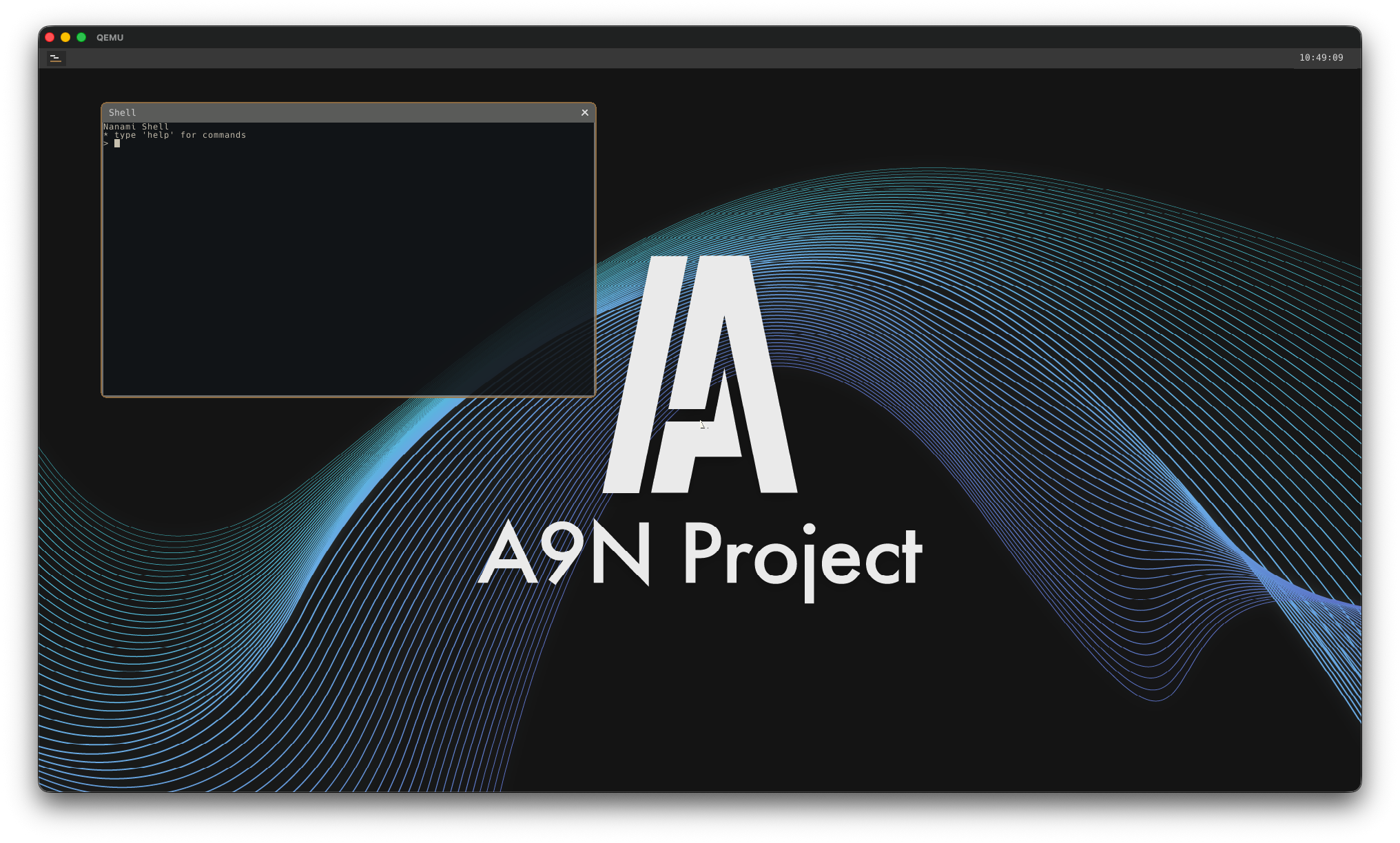
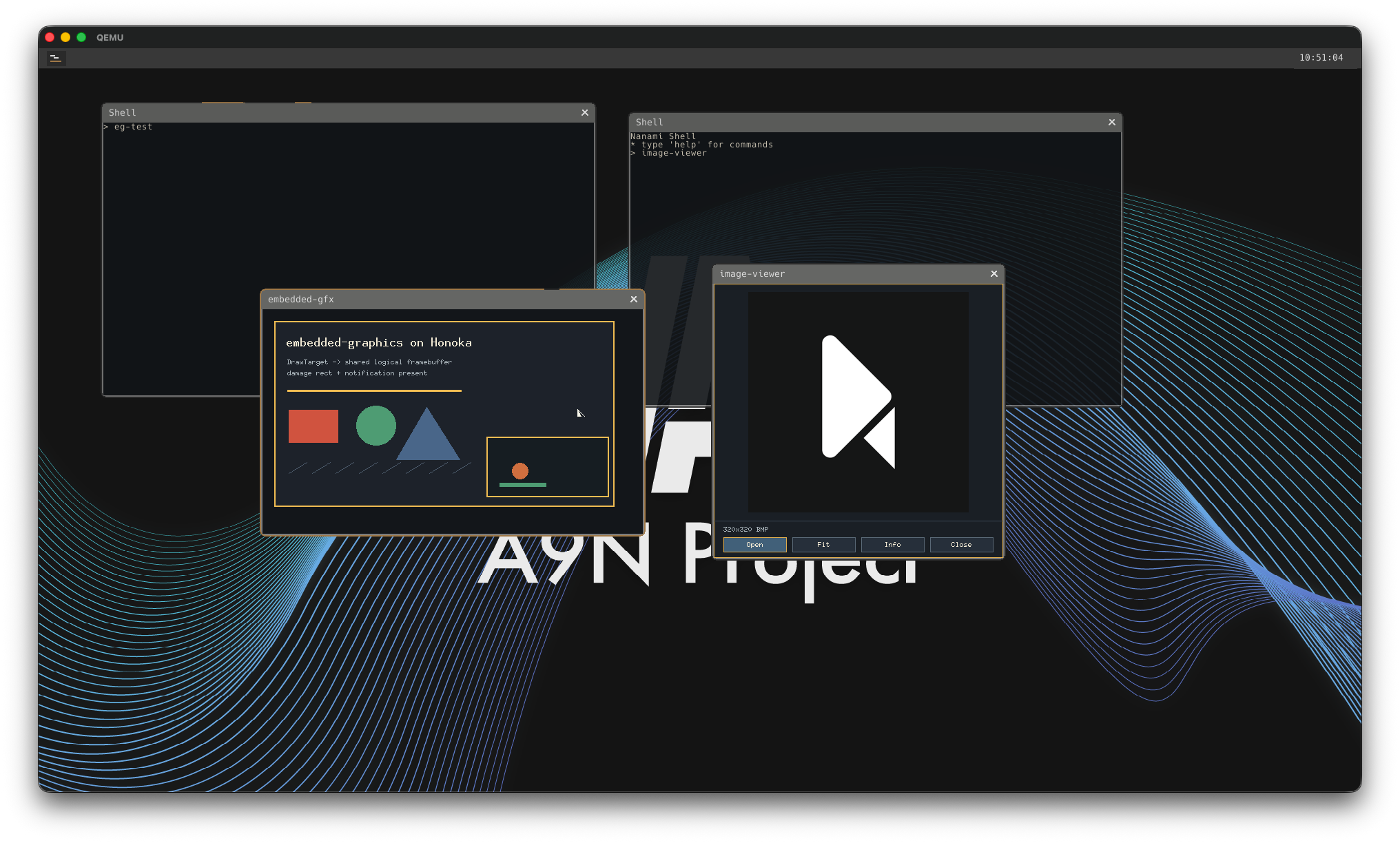
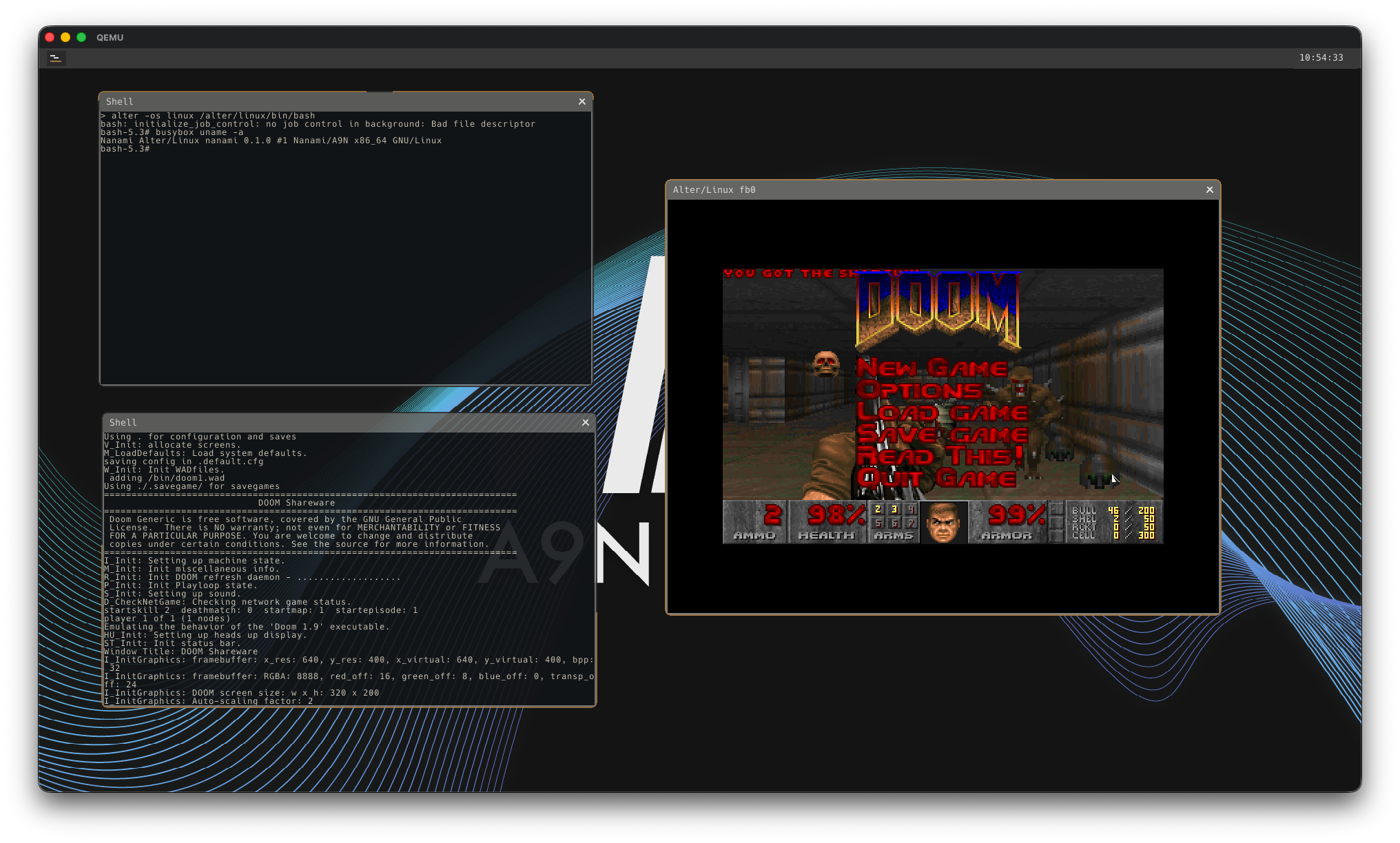
What it provides
- User-space drivers and subsystem servers
- An ext2 root filesystem and service manifests
- IPv4 networking and socket services
- The Honoka desktop and graphical shell
- Alter User-level OS Compatible Layer
Role in the A9N Project
Nanami composes operating-system services and an application environment on A9N. It demonstrates how a complete system can be built above the microkernel without moving policy into the kernel.
Technical details
Primary language
Rust
Supported target
x86_64, QEMU/UEFI
Runtime
Nun
Status
Active development, interfaces may change
License
MIT